Wellness Investing: How Mindfulness Can Actually Grow Your Wealth (Surprising Science)
- Dec 19, 2025
- 5 min read
The intersection of mental wellness and wealth building has become a hot topic in financial circles, with wellness investing emerging as a strategy that promises better returns through mindfulness practices. However, recent scientific research reveals surprising complexities about how mindfulness actually affects investment performance, and the results might challenge everything you think you know about combining meditation with money management.
What Wellness Investing Really Means
Wellness investing refers to the practice of applying mindfulness principles and emotional regulation techniques to financial decision-making. This approach emphasizes self-awareness, emotional control, and present-moment focus when making investment choices. The core premise suggests that by reducing emotional reactivity and increasing cognitive clarity, investors can make more rational decisions that lead to better long-term wealth accumulation.
Financial mindfulness specifically involves maintaining awareness and acceptance of your financial state without judgment. This means regularly checking account balances, acknowledging investment performance (both gains and losses), and making decisions based on data rather than emotional impulses.

The Neuroscience Behind Mindful Investing
Research demonstrates that mindfulness practice strengthens the prefrontal cortex, the brain region responsible for executive decision-making and impulse control. This enhanced neural functioning allows investors to override emotional responses triggered by the amygdala during market volatility.
When markets experience turbulence, mindful investors show measurably lower cortisol levels and reduced stress responses. This physiological advantage translates into practical benefits: they're less likely to panic-sell during downturns or chase performance during market highs.
Studies indicate that investors with stronger emotional regulation capabilities consistently outperform those who make reactive decisions based on fear or greed. The mindfulness advantage becomes particularly pronounced during periods of significant market stress, when emotional decision-making typically destroys wealth.
The Surprising Research Findings
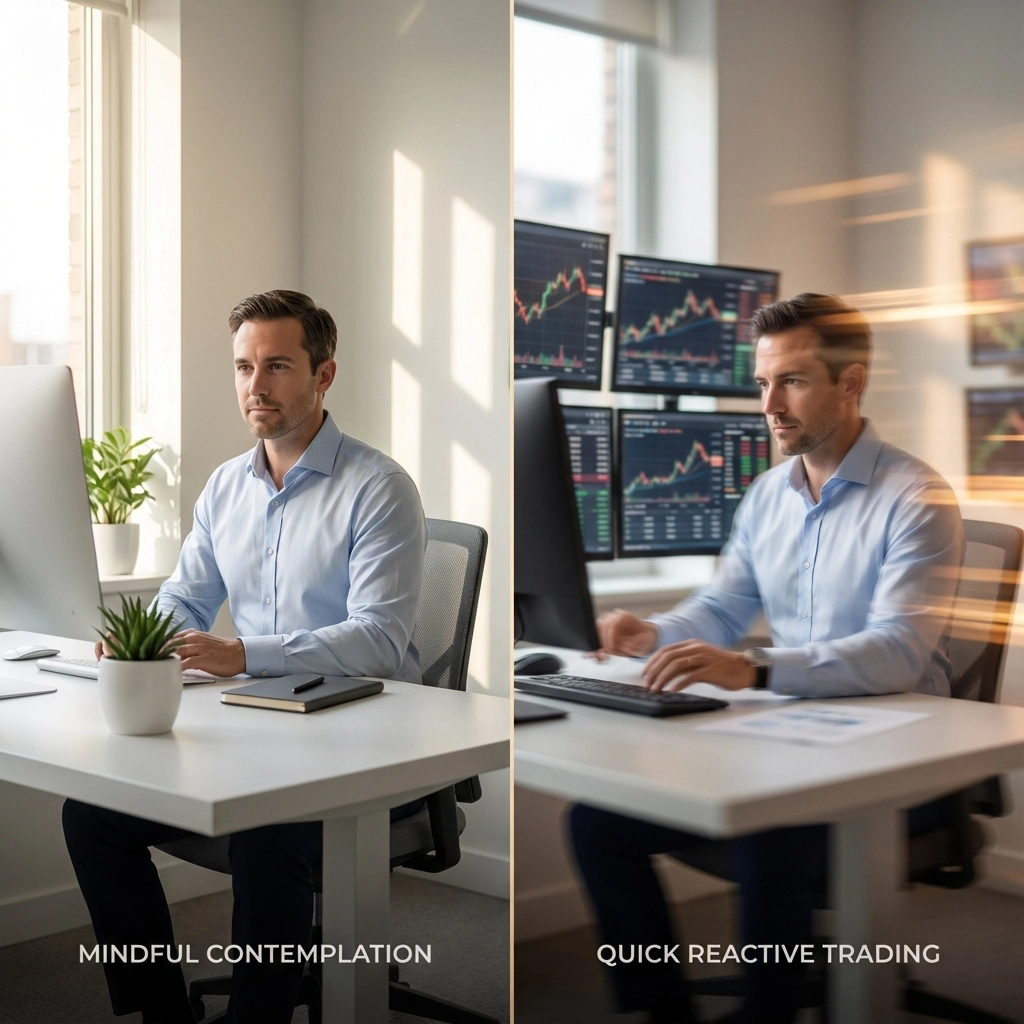
However, controlled experimental studies have revealed unexpected limitations to mindfulness in investing. In one significant research project, mindfulness-trained investors actually underperformed in low-uncertainty trading scenarios with high information loads.
The underperformance was most dramatic following negative news events, with returns declining by 35.4% compared to non-mindful traders. These mindful investors were 10-15% more likely to sell winning stocks early, resulting in approximately 4% less wealth accumulation from their trading sessions.
The mechanism behind this counterintuitive finding reveals a critical insight: mindfulness attenuates thoughts emphasizing negativity but not those emphasizing positivity. This selective emotional dampening can slow down reactions to adverse news, keeping traders exposed to declining positions longer than optimal.
When Mindfulness Helps Your Wealth
Mindfulness provides the greatest investment benefits during high-stress periods with significant market uncertainty. In volatile environments, the ability to observe thoughts without reacting impulsively becomes a competitive advantage for wealth building.
Bias Reduction Benefits
Mindful investors consistently overcome several costly cognitive biases:
Anchoring bias: They avoid fixating on purchase prices when making sell decisions
Loss aversion: They're more willing to realize losses when appropriate
Overconfidence: They maintain realistic assessments of their market predictions
Confirmation bias: They seek disconfirming evidence for their investment theses
Long-Term Perspective Enhancement
Mindfulness practitioners develop stronger capacity for delayed gratification, leading to improved long-term wealth accumulation. They're more likely to maintain disciplined savings rates, contribute consistently to retirement accounts, and avoid impulsive luxury purchases that derail financial goals.
Research shows that mindful individuals are less susceptible to lifestyle inflation and more focused on building sustainable wealth rather than displaying status symbols.
When Mindfulness Hurts Performance
The research reveals specific contexts where mindfulness can impair investment returns. In rapidly changing information environments with low uncertainty, mindfulness's attenuating effect on negative emotional responses becomes a liability.
High-Frequency Trading Environments
For active traders processing large volumes of market information, the delayed reaction to negative signals associated with mindfulness can result in:
Holding depreciating assets longer than optimal
Missing rapid exit opportunities during news-driven selloffs
Reduced market timing effectiveness
Lower overall trading profits
Information Processing Speed
Mindful traders show slower processing of negative market signals, which creates disadvantages in scenarios requiring rapid decision-making. While this delayed reactivity helps during panic-driven market crashes, it hurts performance during orderly declines based on fundamental news.

The Context-Dependent Wealth Formula
The effectiveness of wellness investing depends heavily on matching mindfulness practices to specific financial contexts. Understanding when to apply mindful awareness versus when to trust rapid emotional responses becomes crucial for optimal wealth building.
Optimal Contexts for Mindful Investing
Long-term portfolio management and asset allocation decisions
Retirement planning and systematic savings strategies
Major financial life transitions and goal-setting
Recovery from significant investment losses
Periods of high market volatility and uncertainty
Suboptimal Contexts for Mindfulness
Day trading and short-term speculation
Rapid response to breaking news events
High-frequency tactical adjustments
Market timing strategies
Fast-moving trend-following approaches
Practical Implementation Strategies
To harness mindfulness for wealth building while avoiding its limitations, implement these evidence-based strategies:
Develop Long-Term Mindfulness Practice
Single meditation sessions produce variable and unreliable results for investment performance. Instead, commit to consistent daily practice over months and years to develop sustained emotional regulation capabilities.
Regular meditation builds the neural pathways necessary for maintaining composure during market stress while preserving the ability to respond appropriately to genuine threats.
Separate Strategic from Tactical Decisions
Apply mindful awareness to major strategic financial decisions like asset allocation, retirement contributions, and long-term goals. Use faster, more intuitive responses for tactical adjustments requiring rapid information processing.
This separation allows you to benefit from mindfulness's bias-reduction effects while maintaining responsiveness to time-sensitive opportunities.

Create Structured Decision Frameworks
Develop systematic approaches to investment decisions that incorporate mindful assessment while maintaining decision speed. Use checklists, predetermined criteria, and structured analysis to balance thoughtful consideration with timely action.
Monitor Emotional States During Different Market Conditions
Track your emotional responses and decision quality across various market environments. Identify patterns showing when mindful approaches serve you best versus when faster reactions produce better outcomes.
Building Your Wellness Investment System
Creating an effective wellness investing approach requires balancing mindful awareness with practical market realities. Start with these foundational elements:
Establish clear investment goals and risk tolerance through mindful self-assessment. Regular meditation can provide deeper insight into your authentic financial priorities versus socially influenced desires.
Implement systematic review processes that combine mindful observation with structured analysis. Monthly portfolio reviews using predetermined criteria can maintain objectivity while incorporating intuitive insights.
Develop emotional regulation techniques specifically for financial stress. Practice breathing exercises, body awareness, and cognitive reframing during simulated market scenarios to build resilience for actual volatility.

The Future of Mindful Wealth Building
As research continues revealing the complex relationship between mindfulness and investment performance, successful wealth builders will need increasingly sophisticated approaches that match mental practices to market contexts.
The emerging picture suggests that wellness investing works best as part of a comprehensive financial strategy rather than a standalone solution. By understanding both the benefits and limitations revealed by scientific research, you can harness mindfulness's genuine advantages while avoiding its potential drawbacks.
The key lies not in choosing between mindful and reactive approaches, but in developing the wisdom to know when each serves your wealth-building goals most effectively. This nuanced understanding represents the next evolution in combining mental wellness with financial success.
For investors committed to long-term wealth building, mindfulness offers genuine advantages through improved emotional regulation and bias reduction. However, successful implementation requires matching these practices to appropriate market contexts while maintaining the flexibility to respond quickly when circumstances demand it.

Comments